Impact (Based on Usability Testing & Research)
Projected and self-reported outcomes from prototype testing.
📈
72%
Reported Clearer Understanding of Progress
🔁
Projected
+46% Weekly Practice Frequency
💬
Projected
+34% Confidence When Practicing Alone
Practice Frequency
Inconsistent practice
Guided daily sessions
+46% increase
Progress Clarity
Unclear improvement
Visual progress tracking
72% clarity
User Confidence
Self-doubt, anxiety
Supported & motivated
+34% increase
Resonate didn't just improve technique — it helped users feel supported, motivated, and confident while learning.
How We Measured Impact
Because Resonate was a concept product, impact was evaluated through usability testing, behavioral observation, and self-reported feedback.
🧪
Prototype Usability Testing
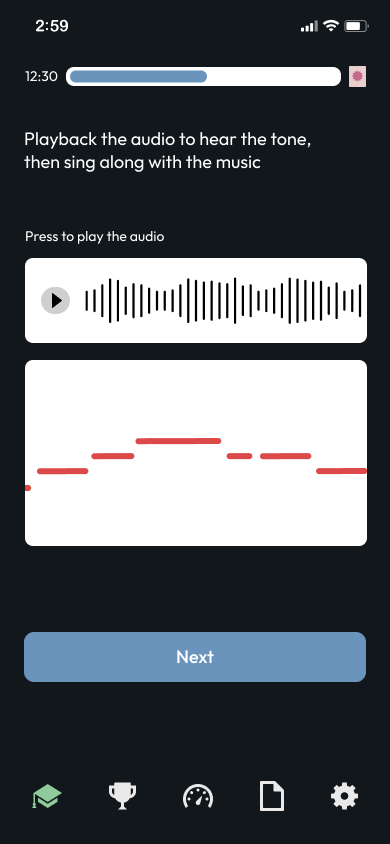
Participants completed guided practice sessions using the Resonate prototype. We observed how easily they understood feedback, followed session structure, and whether they could identify improvement over time.
Task completion
Think-aloud
Comprehension checks
📈
Behavioral Signal Tracking
We tracked completion of daily practice sessions, streak engagement, and interaction with progress tracking features. These behaviors served as indicators of habit formation and sustained motivation.
Session completion
Streak retention
Progress feature usage
💬
Pre- & Post-Test Surveys
After testing, participants rated their confidence practicing independently, clarity of vocal progress, and motivation to continue. Ratings were collected using Likert-scale surveys before and after using the prototype.
Likert-scale ratings
Confidence scoring
Motivation tracking
Result
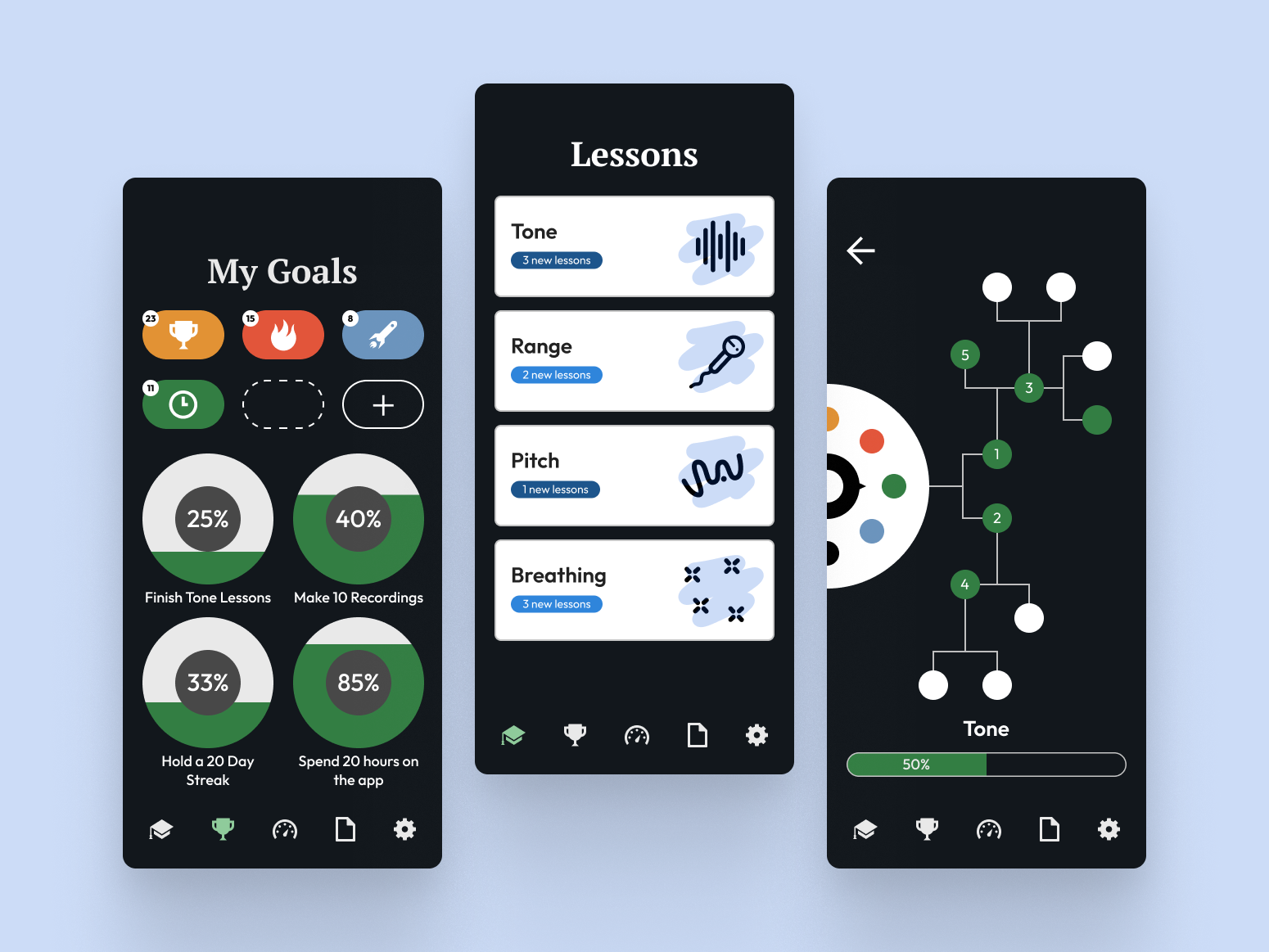
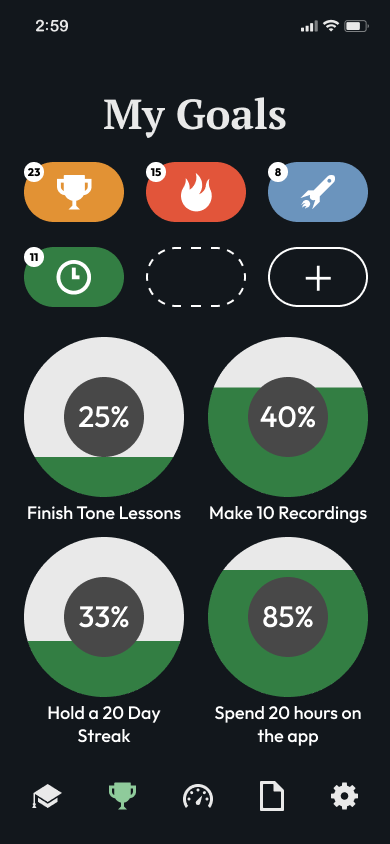
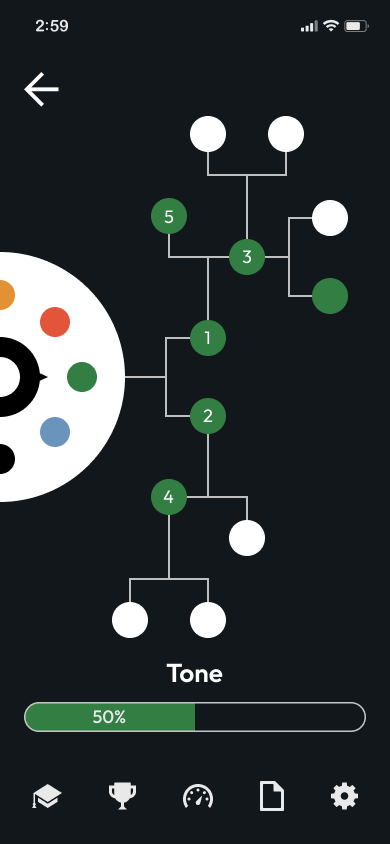
Guided structure, visible progress, and automated feedback helped users practice more consistently, understand their improvement, and feel more confident while learning.
All metrics reflect projected outcomes based on usability testing and research insights.
Designing Resonate taught me that the hardest part of creative learning isn't the skill itself —
it's the emotional weight of not knowing if you're improving. When we made progress
visible, everything else followed.
What I Learned
Resonate reinforced how deeply emotional creative learning can be. Progress isn't just
technical — it's psychological. These insights shaped how I think about designing for confidence.
🪞
Confidence Is the Real Product
Users didn't just want to sing better — they wanted to feel like they were getting better. Visible progress and gentle encouragement mattered more than technical accuracy scores.
🧩
Structure Reduces Anxiety
When practice sessions were pre-structured, users reported less overwhelm and more willingness to return. Removing the "what should I do?" friction was transformative.
🔁
Small Loops Beat Big Goals
5-minute micro-practice sessions with instant feedback created stronger habits than ambitious 30-minute plans. Consistency beats intensity for beginners.
🎨
Creative Tools Need Emotional Safety
Unlike productivity apps, creative tools carry vulnerability. Every piece of microcopy, every feedback tone had to feel encouraging — never judgmental.
Key Takeaway
Designing for creativity means designing for confidence.
01
Adaptive Practice Paths
Personalized learning journeys that adapt to each user's progress and vocal range.
02
Deeper Personalization Through AI
Advanced AI-driven feedback and exercise recommendations based on individual vocal characteristics.
03
Accessibility Support
Support for diverse vocal ranges and accessibility features for users with different needs.
04
Community-Based Encouragement
Safe, supportive community features that provide encouragement without triggering performance anxiety.